FITT Lilforce

FITT Lilforce, the new generation of PVC-HI (PVC-A) pipes designed for treated wastewater reuse infrastructure, in RAL 4005 violet and featuring a heat pre-inserted Power Lock® gasket.

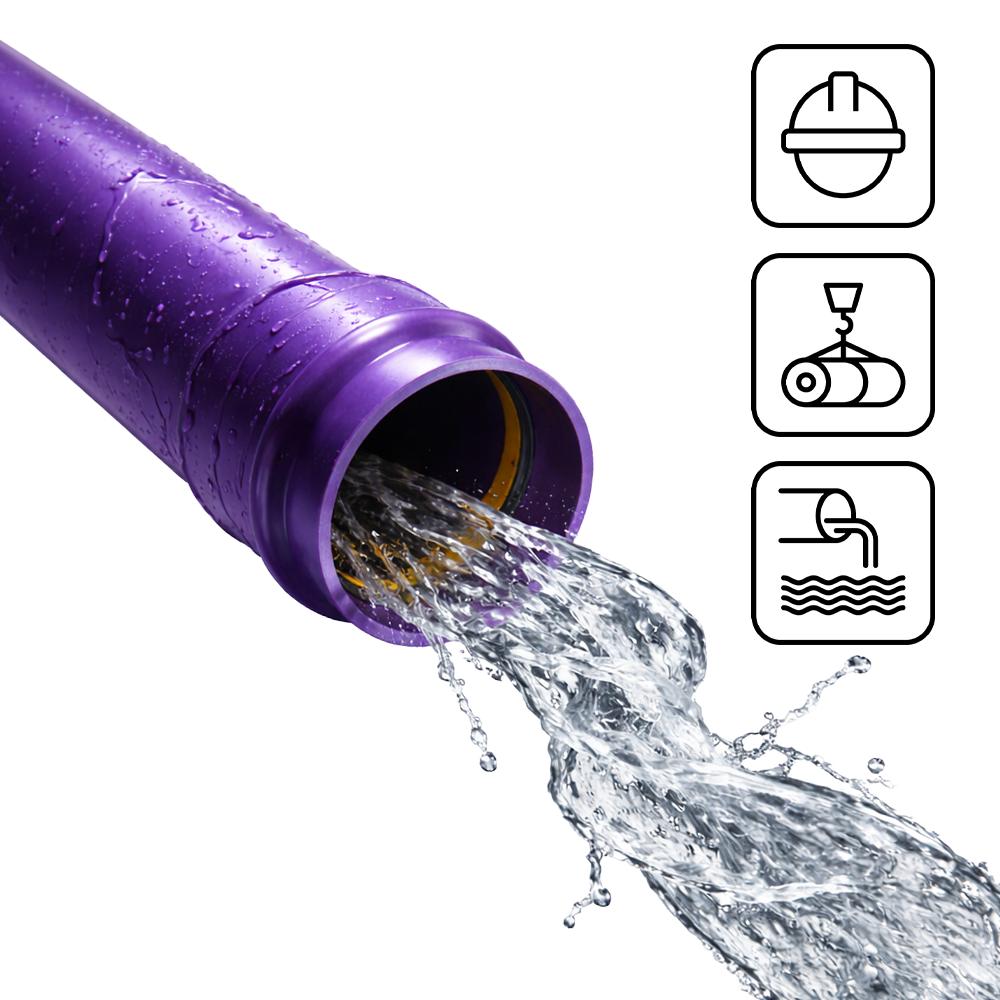
Thanks to PVC-A (PVC-HI)* technology, FITT Lilforce combines ductile behaviour with high resistance to crack propagation, contributing to the long-term reliability of the infrastructure. The RAL 4005 violet colour allows non-potable water networks to be immediately identified and helps prevent cross-connections with the drinking water network. The Power Lock® system, featuring a mechanically heat pre-inserted gasket, simplifies jointing operations during installation and ensures long-lasting hydraulic tightness.

Ideal for reuse networks

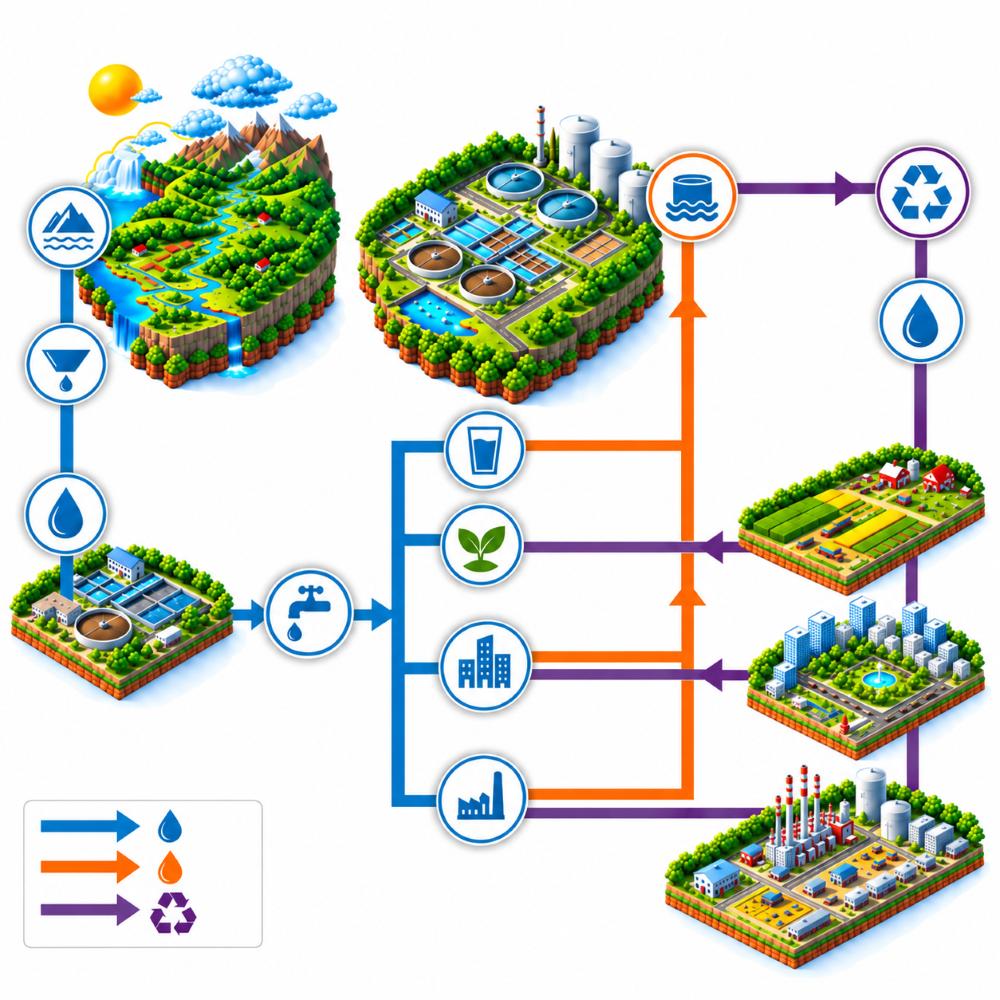
FITT Lilforce is designed for every stage of treated water distribution, from the treatment plant to the end user. It is used in agricultural irrigation networks and urban networks for firefighting, irrigation of public green areas, street cleaning and ornamental fountains. It also serves industrial cooling, washing and methanation processes, as well as “last-mile” networks between treatment plants and points of use.

The RAL 4005 purple colour is the international standard used to distinguish treated wastewater networks. It prevents cross-connections with drinking water pipes and reduces operational errors on site, in accordance with the Risk Management Plans for reclaimed wastewater reuse systems, EU Regulation 2020/741 and Italian Ministerial Decree 185/2003.

FITT Lilforce is made of PVC-A (PVC-HI)* polymer alloy, where “A” stands for “alloy”, obtained by combining the mechanical strength of PVC-U with the ductility of chlorinated polyethylene (CPE). The result is a material with extremely high resistance to crack propagation, the main cause of failure in pressure networks. The technology originated in the UK in the 1990s, when North West Water and the Pipeline Development Ltd. laboratory began research to overcome the limitations of grey cast iron, PVC-U and HDPE, developing a material capable of preventing corrosion, withstanding water hammer and ensuring long-term integrity.

(*) In regulatory terms, it is defined as a high-impact-resistant Polyvinyl Chloride polymer alloy, PVC-HI (such as PVC-M, PVC-A, PVC-CPE). PVC-HI (PVC-M, PVC-A, PVC-CPE) is a thermoplastic material containing PVC resin with the addition of an impact modifier (PVC-High Impact). Depending on the type of impact modifier, the HI acronym may be replaced by different suffixes (PVC-A, Acrylic or PVC-A Alloy (polymer alloy); PVC-CPE, Chlorinated Polyethylene; PVC-M, Modified).

FITT Lilforce uses a socket joint with a seal mechanically pre-inserted while hot during socket formation. The Power Lock® seal is made of EPDM elastomer (UNI EN 681), co-moulded with a fibre-reinforced polypropylene stiffening ring, and is an integral part of the pipe. The integral socketing process eliminates tolerances between the seal and its seat and ensures easy assembly, optimum hydraulic tightness and long-term stability. The seal does not move and the insertion force is reduced by several hundred Newtons, so assembly can be carried out manually, without machinery. Tightness is guaranteed even with angular deflections of up to 3°, allowing wide-radius bends to be created.

Thanks to the PVC-A alloy, FITT Lilforce pipes always exhibit ductile behaviour: no brittle failure and high resistance to crack propagation. Long-term durability, fewer maintenance interventions and a longer service life translate into a lower life-cycle cost for the infrastructure.

Videos

impact passport

FITT S.p.A.
is a Benefit Company


FITT meets high standards of positive environmental and social impact.

Features

Water reuse and Regulation (EU) 2020/741

Water scarcity is no longer a future scenario: at least 11% of Europeans are already affected by water scarcity today. Reusing treated wastewater reduces pressure on resources by replacing drinking water in applications where it is not required, from agricultural irrigation to industrial processes.

More than 40 billion m³ of wastewater is treated in Europe every year, but only 2.4% is further treated and reused. The volume that could be reused is six times higher than current levels.

Regulation (EU) 2020/741 established uniform minimum requirements throughout Europe, paving the way for new infrastructure dedicated to transporting non-potable reclaimed water. FITT Lilforce is designed for these networks, from the reclamation plant to the end user.

Sources: European Environment Agency (EEA); European Commission, DG Environment.
RAL 4005 purple: the global standard for reuse

International regulations and standards converge on the mandatory colour differentiation of non-potable water networks, using purple. FITT Lilforce’s RAL 4005 shade makes the reclaimed water network immediately distinguishable from the drinking water network.

Benefits on site and in operation:

• Prevention of cross-connections with the drinking water network

• Reduction of operational errors during installation and maintenance

• Compliance with Risk Management Plans for reclaimed wastewater reuse systems

• Clear network identification in accordance with EU Regulation 2020/741 and Italian Ministerial Decree 185/2003

Power Lock®: fewer tolerances, greater tightness

In a traditional jointing system, 4 tolerances add up. With Power Lock®, the seal is hot pre-inserted during socket formation and the tolerances are reduced to 2, because the seal and pipe act as a single unit.

The result is guaranteed hydraulic tightness under both positive and negative pressure, even with angular deflections of up to 3° at the joint. The seal cannot move, be lost or become damaged, and the internal dimensions of the socket do not change over time.

The insertion force is also reduced by several hundred Newtons, with an advantage that increases with diameter: assembly is manual, without machinery.

Efficiency at every stage

FITT Lilforce simplifies the work of all infrastructure stakeholders.

• Designers: lower risk of cross-connections with the drinking water network, greater joint reliability, time savings in checks and testing.

• Installers: seal already inserted and immovable, reduced assembly force, less labour and shorter installation times.

• Plant operators: reliable separation between the drinking water and reuse networks, no risk of incorrect installation, sealing that prevents groundwater from entering the pipeline.
Request more information
Technical data

Download technical documentation